
BITCOIN, is a 50% drawdown sufficient?
Since the beginning of last October, the price of Bitcoin has been evolving within its cyclical bear market, and the drawdown has reached 50% by taking the difference between the all-time high of last October 6 and the low at 60,000 US dollars on February 6.
Since then, the geopolitical situation in the Middle East has become explosive with the launch of military operations by the United States and Israel against Iran on February 28. This systemic geopolitical risk has, quite surprisingly, not significantly impacted the price of Bitcoin. Many traders were expecting a rapid drop of Bitcoin towards 50,000 US dollars, but the latter has displayed a rare outperformance compared to the equity market by remaining broadly in a trading range between 65,000 US dollars and 75,000 US dollars.
Is this resilience of BTC sufficient proof to affirm that the cyclical bear market is already over? If we believe in the theory of the 4-year cycle and the historical drawdowns of previous bear markets, the answer is no; no, it is not sufficient.
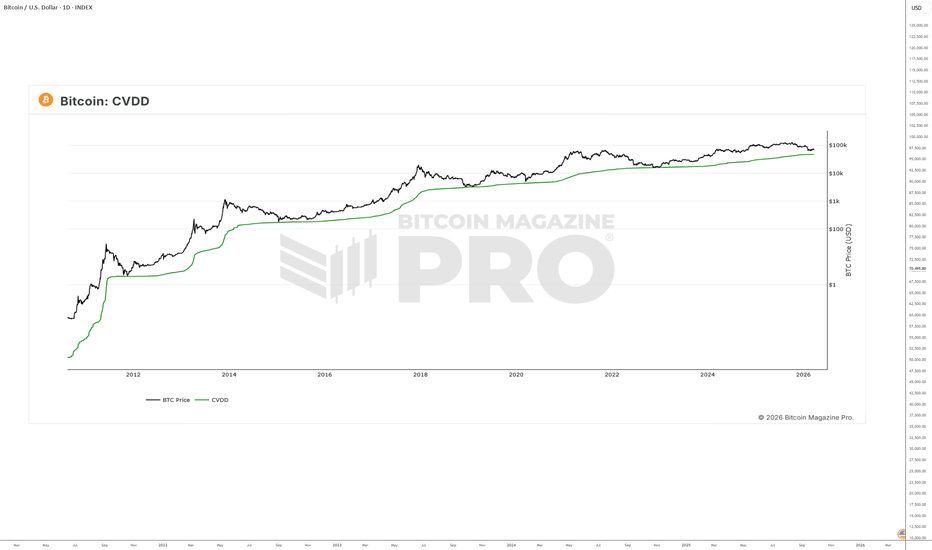
The true final bottom of the cyclical bear market is expected later in the year, in the second half of 2026, and at price levels slightly lower. Click on the chart below to access the top 3 indicators for the final price bottom of the bear market.
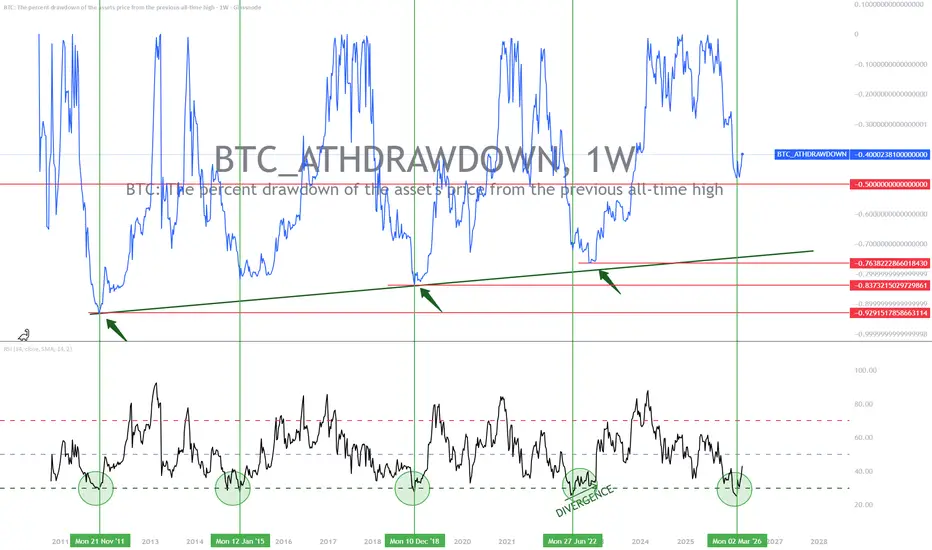
But will the market really end up making this final low that the majority is expecting? Some technical data are indeed troubling and seem to indicate that the 50% drawdown could be sufficient for this bear market, even though this drawdown is much smaller than past drawdowns as shown in the chart below.
The chart below reveals the percentage of drawdown of the Bitcoin price between its all-time highs and the final low of the cyclical bear market (within the framework of the well-known so-called 4-year cycle, structured around the quadrennial halving).

Take the time to observe the chart because there is an intriguing technical signal on the RSI technical indicator applied to the drawdown percentage. The latter has just exited the oversold zone to the upside, a signal that has always been given at the end of cyclical bear markets. Certainly, the drawdown is only 50%, but the RSI signal applied to it suggests that this 50% could be the lowest point or at least close to it.
So in your opinion, is the 50% drawdown from the all-time high sufficient or should we go back down again towards -70%?
DISCLAIMER:
This content is intended for individuals who are familiar with financial markets and instruments and is for information purposes only. The presented idea (including market commentary, market data and observations) is not a work product of any research department of Swissquote or its affiliates. This material is intended to highlight market action and does not constitute investment, legal or tax advice. If you are a retail investor or lack experience in trading complex financial products, it is advisable to seek professional advice from licensed advisor before making any financial decisions.
This content is not intended to manipulate the market or encourage any specific financial behavior.
Swissquote makes no representation or warranty as to the quality, completeness, accuracy, comprehensiveness or non-infringement of such content. The views expressed are those of the consultant and are provided for educational purposes only. Any information provided relating to a product or market should not be construed as recommending an investment strategy or transaction. Past performance is not a guarantee of future results.
Swissquote and its employees and representatives shall in no event be held liable for any damages or losses arising directly or indirectly from decisions made on the basis of this content.
The use of any third-party brands or trademarks is for information only and does not imply endorsement by Swissquote, or that the trademark owner has authorised Swissquote to promote its products or services.
Swissquote is the marketing brand for the activities of Swissquote Bank Ltd (Switzerland) regulated by FINMA, Swissquote Capital Markets Limited regulated by CySEC (Cyprus), Swissquote Bank Europe SA (Luxembourg) regulated by the CSSF, Swissquote Ltd (UK) regulated by the FCA, Swissquote Financial Services (Malta) Ltd regulated by the Malta Financial Services Authority, Swissquote MEA Ltd. (UAE) regulated by the Dubai Financial Services Authority, Swissquote Pte Ltd (Singapore) regulated by the Monetary Authority of Singapore, Swissquote Asia Limited (Hong Kong) licensed by the Hong Kong Securities and Futures Commission (SFC) and Swissquote South Africa (Pty) Ltd supervised by the FSCA.
Products and services of Swissquote are only intended for those permitted to receive them under local law.
All investments carry a degree of risk. The risk of loss in trading or holding financial instruments can be substantial. The value of financial instruments, including but not limited to stocks, bonds, cryptocurrencies, and other assets, can fluctuate both upwards and downwards. There is a significant risk of financial loss when buying, selling, holding, staking, or investing in these instruments. SQBE makes no recommendations regarding any specific investment, transaction, or the use of any particular investment strategy.
CFDs are complex instruments and come with a high risk of losing money rapidly due to leverage. The vast majority of retail client accounts suffer capital losses when trading in CFDs. You should consider whether you understand how CFDs work and whether you can afford to take the high risk of losing your money.
Digital Assets are unregulated in most countries and consumer protection rules may not apply. As highly volatile speculative investments, Digital Assets are not suitable for investors without a high-risk tolerance. Make sure you understand each Digital Asset before you trade.
Cryptocurrencies are not considered legal tender in some jurisdictions and are subject to regulatory uncertainties.
The use of Internet-based systems can involve high risks, including, but not limited to, fraud, cyber-attacks, network and communication failures, as well as identity theft and phishing attacks related to crypto-assets.
Since then, the geopolitical situation in the Middle East has become explosive with the launch of military operations by the United States and Israel against Iran on February 28. This systemic geopolitical risk has, quite surprisingly, not significantly impacted the price of Bitcoin. Many traders were expecting a rapid drop of Bitcoin towards 50,000 US dollars, but the latter has displayed a rare outperformance compared to the equity market by remaining broadly in a trading range between 65,000 US dollars and 75,000 US dollars.
Is this resilience of BTC sufficient proof to affirm that the cyclical bear market is already over? If we believe in the theory of the 4-year cycle and the historical drawdowns of previous bear markets, the answer is no; no, it is not sufficient.
The true final bottom of the cyclical bear market is expected later in the year, in the second half of 2026, and at price levels slightly lower. Click on the chart below to access the top 3 indicators for the final price bottom of the bear market.
But will the market really end up making this final low that the majority is expecting? Some technical data are indeed troubling and seem to indicate that the 50% drawdown could be sufficient for this bear market, even though this drawdown is much smaller than past drawdowns as shown in the chart below.
The chart below reveals the percentage of drawdown of the Bitcoin price between its all-time highs and the final low of the cyclical bear market (within the framework of the well-known so-called 4-year cycle, structured around the quadrennial halving).
Take the time to observe the chart because there is an intriguing technical signal on the RSI technical indicator applied to the drawdown percentage. The latter has just exited the oversold zone to the upside, a signal that has always been given at the end of cyclical bear markets. Certainly, the drawdown is only 50%, but the RSI signal applied to it suggests that this 50% could be the lowest point or at least close to it.
So in your opinion, is the 50% drawdown from the all-time high sufficient or should we go back down again towards -70%?
DISCLAIMER:
This content is intended for individuals who are familiar with financial markets and instruments and is for information purposes only. The presented idea (including market commentary, market data and observations) is not a work product of any research department of Swissquote or its affiliates. This material is intended to highlight market action and does not constitute investment, legal or tax advice. If you are a retail investor or lack experience in trading complex financial products, it is advisable to seek professional advice from licensed advisor before making any financial decisions.
This content is not intended to manipulate the market or encourage any specific financial behavior.
Swissquote makes no representation or warranty as to the quality, completeness, accuracy, comprehensiveness or non-infringement of such content. The views expressed are those of the consultant and are provided for educational purposes only. Any information provided relating to a product or market should not be construed as recommending an investment strategy or transaction. Past performance is not a guarantee of future results.
Swissquote and its employees and representatives shall in no event be held liable for any damages or losses arising directly or indirectly from decisions made on the basis of this content.
The use of any third-party brands or trademarks is for information only and does not imply endorsement by Swissquote, or that the trademark owner has authorised Swissquote to promote its products or services.
Swissquote is the marketing brand for the activities of Swissquote Bank Ltd (Switzerland) regulated by FINMA, Swissquote Capital Markets Limited regulated by CySEC (Cyprus), Swissquote Bank Europe SA (Luxembourg) regulated by the CSSF, Swissquote Ltd (UK) regulated by the FCA, Swissquote Financial Services (Malta) Ltd regulated by the Malta Financial Services Authority, Swissquote MEA Ltd. (UAE) regulated by the Dubai Financial Services Authority, Swissquote Pte Ltd (Singapore) regulated by the Monetary Authority of Singapore, Swissquote Asia Limited (Hong Kong) licensed by the Hong Kong Securities and Futures Commission (SFC) and Swissquote South Africa (Pty) Ltd supervised by the FSCA.
Products and services of Swissquote are only intended for those permitted to receive them under local law.
All investments carry a degree of risk. The risk of loss in trading or holding financial instruments can be substantial. The value of financial instruments, including but not limited to stocks, bonds, cryptocurrencies, and other assets, can fluctuate both upwards and downwards. There is a significant risk of financial loss when buying, selling, holding, staking, or investing in these instruments. SQBE makes no recommendations regarding any specific investment, transaction, or the use of any particular investment strategy.
CFDs are complex instruments and come with a high risk of losing money rapidly due to leverage. The vast majority of retail client accounts suffer capital losses when trading in CFDs. You should consider whether you understand how CFDs work and whether you can afford to take the high risk of losing your money.
Digital Assets are unregulated in most countries and consumer protection rules may not apply. As highly volatile speculative investments, Digital Assets are not suitable for investors without a high-risk tolerance. Make sure you understand each Digital Asset before you trade.
Cryptocurrencies are not considered legal tender in some jurisdictions and are subject to regulatory uncertainties.
The use of Internet-based systems can involve high risks, including, but not limited to, fraud, cyber-attacks, network and communication failures, as well as identity theft and phishing attacks related to crypto-assets.

This content is written by Vincent Ganne for Swissquote.
This content is intended for individuals who are familiar with financial markets and instruments and is for information purposes only and does not constitute investment, legal or tax advice.
This content is intended for individuals who are familiar with financial markets and instruments and is for information purposes only and does not constitute investment, legal or tax advice.
Disclaimer
The information and publications are not meant to be, and do not constitute, financial, investment, trading, or other types of advice or recommendations supplied or endorsed by TradingView. Read more in the Terms of Use.
This content is written by Vincent Ganne for Swissquote.
This content is intended for individuals who are familiar with financial markets and instruments and is for information purposes only and does not constitute investment, legal or tax advice.
This content is intended for individuals who are familiar with financial markets and instruments and is for information purposes only and does not constitute investment, legal or tax advice.
Disclaimer
The information and publications are not meant to be, and do not constitute, financial, investment, trading, or other types of advice or recommendations supplied or endorsed by TradingView. Read more in the Terms of Use.